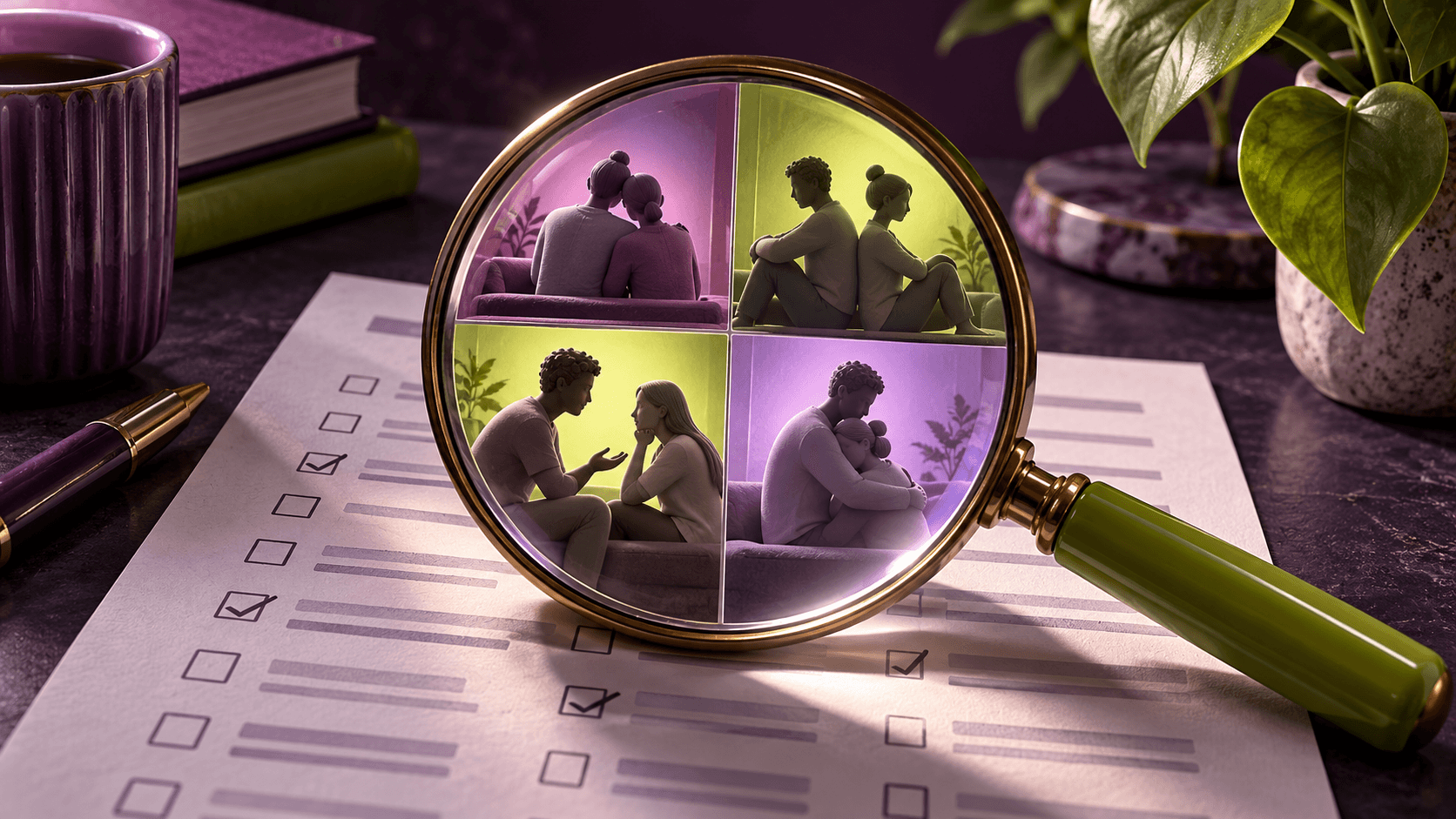
Your partner laughs at someone else's joke a little too long, or likes an old friend's photo, and your stomach drops. You know it is probably nothing. But the feeling arrives fast and refuses to leave, and you find yourself checking, asking or going quiet.
If jealousy hits you harder or more often than it seems to hit other people, you are not being irrational or dramatic. Attachment research suggests jealousy is closely tied to how safe you feel in close relationships. Understanding your attachment style can explain why the feeling is so strong, and what actually helps it settle.
What jealousy really is
Jealousy is the feeling that a relationship you value is under threat from someone or something else. It is a mix of emotions, often including fear, anger, sadness and insecurity.
Researchers sometimes separate jealousy into a few parts:
- Emotional jealousy: the gut-level reaction, like a jolt of anxiety or anger.
- Cognitive jealousy: suspicious thoughts and worries, such as "What if they prefer them?"
- Behavioural jealousy: what you do about it, like checking their phone or asking lots of questions.
Feeling a flash of jealousy now and then is a normal part of caring about someone. It becomes a problem when it is frequent, intense or leads to behaviour that hurts you or your partner.
The attachment link
Attachment theory describes how we seek closeness and security with the people we depend on. In adults, attachment is usually measured on two dimensions: anxiety about rejection and abandonment, and avoidance of closeness and dependence.
From an attachment point of view, jealousy is a signal that the attachment system has detected a threat to the bond. How strongly that alarm goes off, and what you do next, depends a lot on your attachment style.
Research has found this link fairly consistently. A 1997 study by Robert Sharpsteen and Lee Kirkpatrick, for example, found that attachment style was related to both how often people felt jealous and how they expressed it, with more anxiously attached people reporting stronger jealousy.
How each attachment style tends to experience jealousy
Anxious attachment
People higher in attachment anxiety tend to feel jealousy most intensely. They are often primed to notice signs of rejection, so ambiguous situations, like a slow reply or a new colleague, can feel threatening. Common reactions include seeking reassurance, monitoring a partner's activity or protest behaviour, such as going cold or picking a fight to test the relationship.
Avoidant attachment
Avoidant people may feel jealousy but are more likely to hide it, even from themselves. Instead of reaching out, they might withdraw, act indifferent or quietly start creating distance to protect themselves from being hurt.
Fearful avoidant attachment
People with a fearful avoidant style are high in both anxiety and avoidance. Jealousy can bring intense fear of losing the relationship alongside an urge to push the partner away first. This can lead to confusing swings between clinging and withdrawing.
Secure attachment
Securely attached people still feel jealous at times. The difference is that the feeling tends to be less intense, and they are more likely to talk about it openly and give their partner the benefit of the doubt.
| Attachment style | How jealousy tends to feel | Common reaction | What helps most |
|---|---|---|---|
| Secure | Brief and manageable | Raises it calmly, asks directly | Honest conversation |
| Anxious | Intense and hard to shake | Seeks reassurance, checks, protests | Self-soothing and clear requests |
| Avoidant | Muted or denied | Withdraws, acts indifferent | Naming the feeling, staying engaged |
| Fearful avoidant | Overwhelming and conflicting | Swings between clinging and pulling away | Slowing down, steady routines |
Why jealousy feels so strong
If you get jealous easily, a few things may be amplifying the feeling.
- Your threat detector is sensitive. If you have learned to expect people to leave, you are quicker to spot possible threats, including ones that are not there.
- Your self-worth is tied to the relationship. When you feel valuable mainly through your partner's attention, any sign of their interest elsewhere can feel like a threat to your sense of self.
- Uncertainty is hard to sit with. Not knowing for sure can feel worse than bad news, so your mind fills the gap with worst-case stories.
- Past experiences. Being cheated on or let down before can make your alarm louder in future relationships.
Social media can add fuel. A 2009 study by Amy Muise and colleagues found that people who spent more time on Facebook reported more jealousy, possibly because it exposed them to more ambiguous information about their partner, which then prompted even more checking.
Is your jealousy telling you something real?
Not all jealousy is about insecurity. Sometimes it is a response to genuine signs that something is wrong, such as a partner being secretive or dismissive of your concerns.
A useful question is: Is this feeling a response to what is happening, or to what I fear might happen? Look at patterns over time rather than single moments. If your partner is consistently caring, honest and reliable, your jealousy may be more about your attachment system than about them.
If the opposite is true, and you are often made to feel insecure, it may be worth reassessing the relationship.
How to feel less jealous
You cannot simply switch jealousy off, but you can change how you respond to it.
- Pause before acting. When jealousy spikes, wait ten minutes before you text, check or confront. The urge often eases.
- Name the fear underneath. Try "I'm scared of losing you" instead of "Who were you talking to?"
- Ask for what you need. A clear request, like "Could you text me when you'll be late?", works better than testing your partner.
- Notice the reassurance loop. Reassurance helps briefly, but asking for it repeatedly can make the anxiety stronger. We explain why in why reassurance never feels like enough.
- Strengthen your own foundations. Friendships, interests and goals make your sense of worth less dependent on one relationship.
Understanding your style is a good first step. You can take our free attachment style test to see where you sit on attachment anxiety and avoidance, then use the results to guide which strategies to try first.
When jealousy becomes harmful
Jealousy is a feeling, not an excuse for controlling behaviour. Checking a partner's phone without permission, restricting who they see or reacting with threats or anger can damage trust and cause real harm.
If jealousy is affecting your wellbeing or your relationship, or if you feel controlled or unsafe because of a partner's jealousy, speaking with a counsellor or therapist can help. Couples therapy can also be useful when both partners want to work on it.
The bottom line
If you get jealous easily, your attachment style is likely part of the reason. Anxious attachment in particular can make your alarm system sensitive to threats, so ordinary moments feel like warning signs. Jealousy is not a flaw, but it is worth understanding. With calmer responses, clearer communication and a stronger sense of your own worth, it can lose much of its grip.
FAQ
Is jealousy a sign of insecure attachment?
Not always. Everyone feels jealous sometimes, but frequent or intense jealousy is more common in people with higher attachment anxiety.
Why do I get jealous over small things?
If you have a sensitive attachment system, small or ambiguous events can feel like threats to the relationship. Your mind may fill in the gaps with worst-case stories, even when nothing is wrong.
Do avoidant people get jealous?
Yes, though they may not show it. Avoidant people are more likely to hide jealousy, withdraw or act indifferent rather than seeking reassurance.
Can jealousy go away?
Jealousy is unlikely to disappear completely, but it can become much less intense. Building attachment security, pausing before reacting and communicating needs clearly all help.