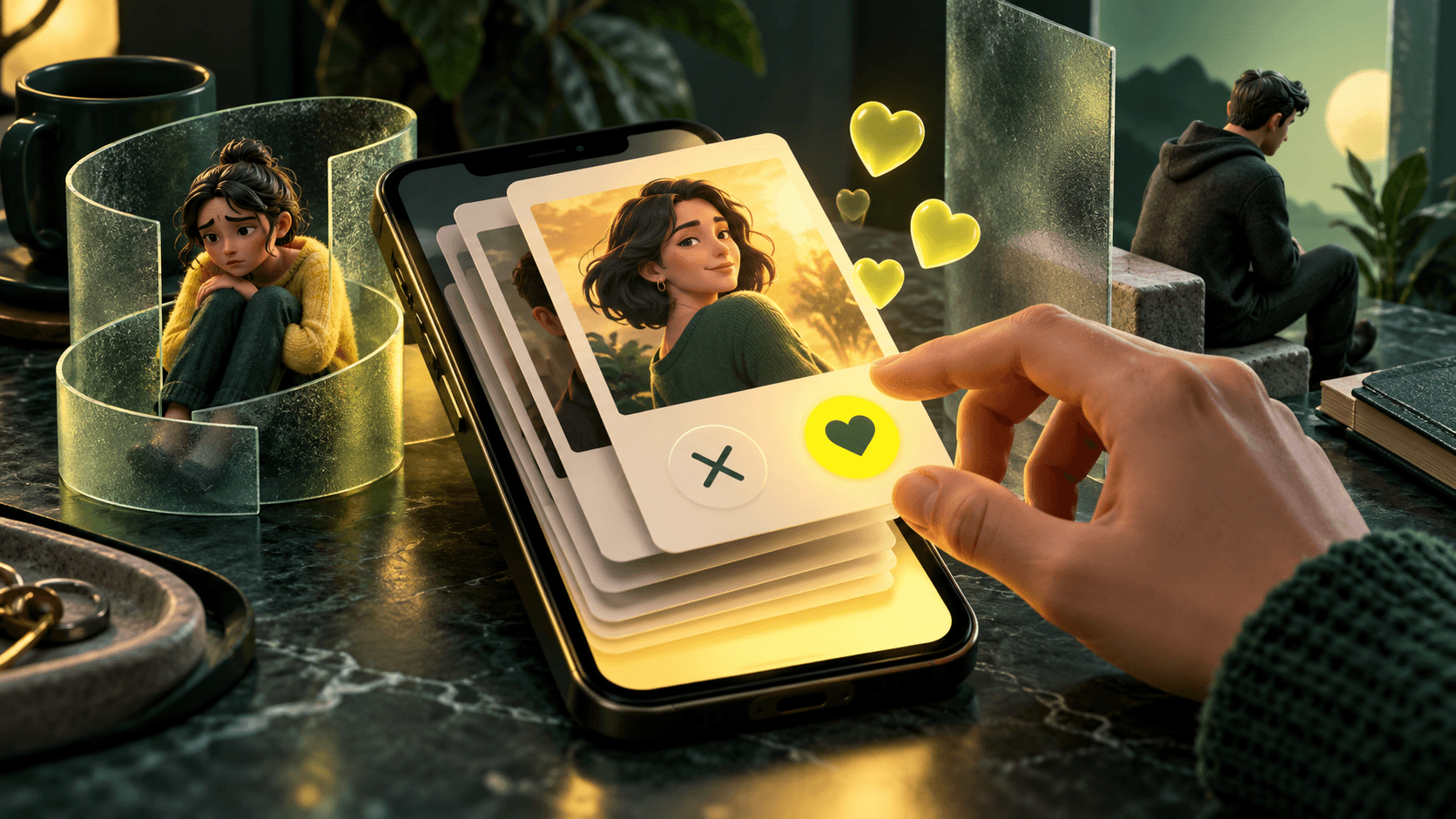
You match, chat for two days, and feel a flicker of hope. Then they stop replying. Meanwhile, someone else messages you, but you can't quite be bothered, because there are two hundred more profiles waiting. By the end of the week you're tired, a little numb, and not sure what you're looking for any more.
Dating apps didn't invent these feelings, but they amplify them. And they amplify them very differently depending on your attachment style. If you lean anxious or avoidant, here's what the apps may be doing to you, and how to use them without letting them run your nervous system.
A quick refresher on attachment
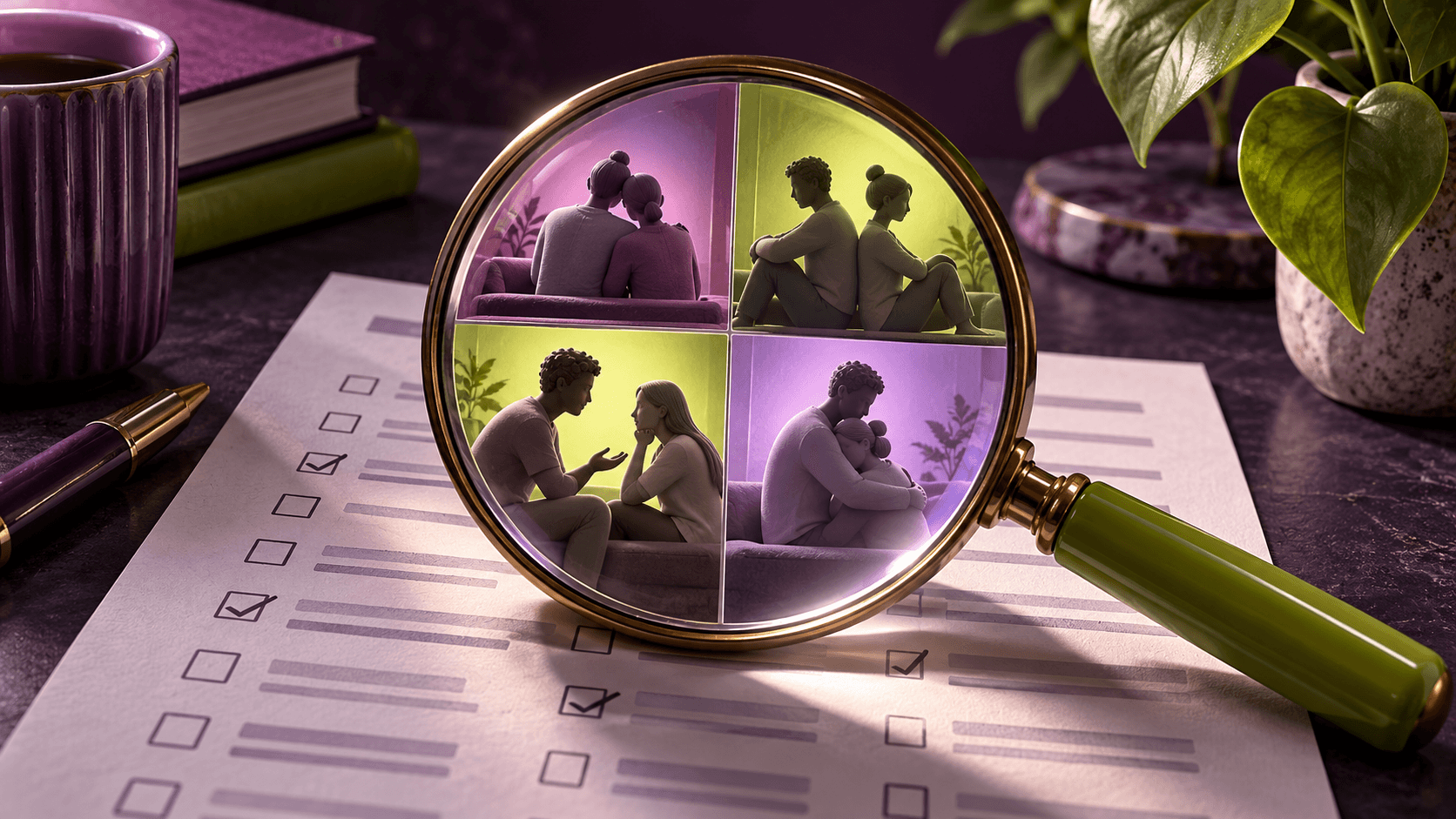
Adult attachment is usually described along two dimensions. Attachment anxiety is about fear of rejection and a strong need for reassurance. Attachment avoidance is about discomfort with closeness and a preference for independence. Most people sit somewhere on both, and our guide to the four attachment styles explains how they combine.
Dating apps are, in effect, a machine for producing small moments of potential connection and potential rejection. That's exactly the territory attachment systems care about.
What the research suggests
Research on attachment and dating apps is still young, and findings vary. A few patterns come up repeatedly in studies:
- Anxiously attached people tend to use dating apps more, in some studies, perhaps because apps offer a constant supply of possible reassurance.
- Avoidance has a less consistent link with app use, but avoidant users may engage more casually and keep conversations at arm's length.
- People can become more rejecting as they swipe. Some research suggests that as people work through many profiles in a session, they become more likely to swipe left, a kind of "rejection mindset" that builds with choice.
- Ambiguous endings are common. Fading out or ghosting is a regular part of app dating, which can hit people very differently.
None of this means apps are bad for everyone. Many lasting couples meet online. But the design does interact with attachment in predictable ways.
How apps affect anxious daters
If you lean anxious, apps can feel like a slot machine for your self-worth.
Matches become a mood barometer
A good day of matches feels validating. A quiet day feels like proof you're undesirable. Your sense of being lovable starts to ride on an algorithm.
Slow replies set off alarms
Online conversations are often slow, patchy and easily dropped. For an anxious nervous system, every gap can feel like rejection. Our piece on anxious attachment and texting explains why a late reply can feel like an emergency.
Intermittent rewards keep you hooked
Matches and messages arrive unpredictably. Unpredictable rewards are especially compelling, which can make it hard to put the app down even when it's making you feel worse.
You invest early and hard
Anxious daters often attach quickly to someone they've barely met, imagining a future after a few good messages. When it fades, the disappointment can be outsized.
How apps affect avoidant daters
If you lean avoidant, apps can feel comfortable, at first. They let you control the pace and keep things light.
Endless options make commitment feel optional
With so many profiles, there's always a reason not to go deeper with the person in front of you. Small flaws can feel like grounds to move on.
Distance is built in
Text-based chat lets you engage without being fully seen. That can feel safe, but it also lets you avoid the moments where real closeness starts.
Fading out is easy
When someone starts wanting more, the app offers a quiet exit. You don't have to explain or have a hard conversation. Over time, that ease can reinforce avoidance.
You may feel nothing, then feel bad about feeling nothing
Some avoidant daters notice they swipe and chat on autopilot, rarely feeling excited. That flatness is often a protective habit, not a sign that no one is right for you.
When anxious meets avoidant online
Apps make it particularly easy for anxious and avoidant daters to find each other. The avoidant dater's breezy confidence can feel exciting to the anxious one, and the anxious dater's warmth can feel flattering to the avoidant one, at first.
| Anxious dater | Avoidant dater | |
|---|---|---|
| Uses the app to | Find connection and reassurance | Meet people while keeping control |
| Struggles with | Gaps, mixed signals, being dropped | Rising expectations, pressure to commit |
| Common habit | Over-investing early | Keeping several conversations light |
| What helps | Slowing down, steady self-worth | Staying engaged a little longer |
The result can be a fast version of the classic chase-and-retreat pattern. If that sounds familiar, our article on why situationships hit anxiously attached people the hardest goes deeper.
How to use dating apps more securely
You don't need to delete every app. A few changes can make them far kinder to your nervous system.
For everyone
- Set time limits. Swipe in short, planned sessions rather than whenever you're bored or low.
- Talk to fewer people at once. Depth usually beats breadth.
- Move to a call or meeting sooner. Real-time interaction gives you better information than days of texting.
- Notice how you feel after each session. If you consistently feel worse, take a break.
If you lean anxious
- Keep your evening plans with friends, even when a promising match is texting.
- Remind yourself that silence on an app is usually about the other person's life, not your worth.
- Wait until you've met someone a few times before imagining a future.
If you lean avoidant
- Choose one or two people and stay curious for longer than feels natural.
- If you want to end things, send a short, kind message instead of fading out.
- Notice when you're finding faults just as things start to get real.
If you're not sure which way you lean, you can take our free attachment style test before your next swiping session.
The bottom line
Dating apps amplify whatever your attachment system already does. Anxious daters may ride an exhausting rollercoaster of hope and rejection, while avoidant daters may find it all too easy to keep things shallow. Using apps in shorter, more intentional bursts, and moving to real contact sooner, helps both styles date in a steadier way.
FAQ
Are dating apps worse for anxiously attached people?
They can be harder, because frequent ambiguity and silence tend to trigger attachment anxiety. Using them in limited, intentional sessions often helps.
Do avoidant people use dating apps?
Yes. Avoidant daters may use apps comfortably but keep conversations light or shift between people to avoid closeness.
Why do dating apps make me feel so drained?
Constant small rejections, endless choice and unpredictable rewards are tiring. Many people feel better with time limits and fewer conversations at once.
Can you find a secure partner on a dating app?
Yes. Securely attached people use apps too. Moving to calls or dates sooner helps you spot consistent, reliable behaviour more quickly.