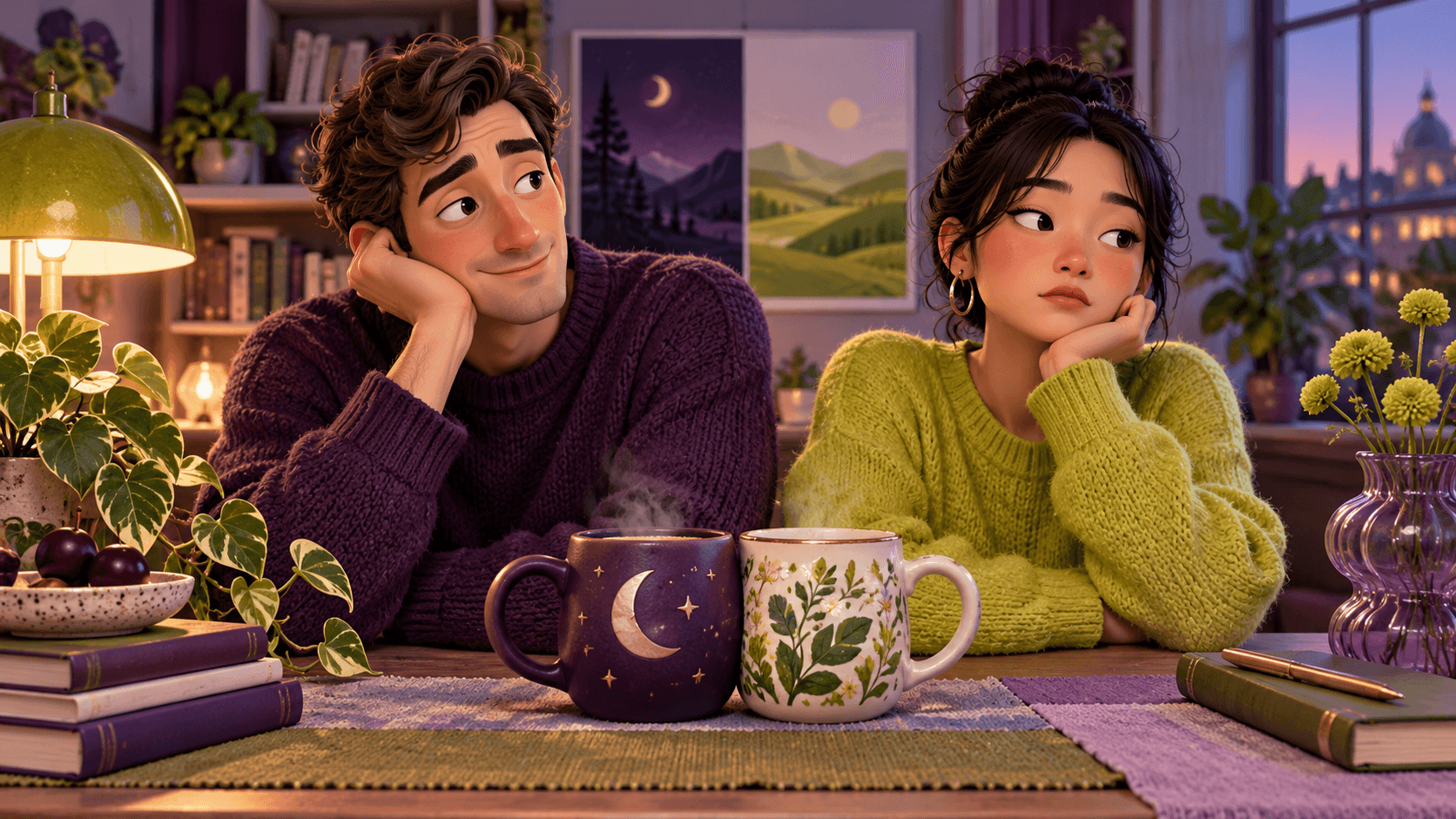
Every romantic comedy seems to agree: the tidy one falls for the chaotic one, the shy bookworm ends up with the loud adventurer, and their differences are the whole point. "Opposites attract" is one of the most repeated ideas about love.
It is also one of the least supported. Decades of research on real couples point the other way: people mostly pair up with partners who resemble them. Here is what the evidence shows, why the myth survives anyway, and which differences can actually help a relationship.
Where the idea comes from
The belief has a long history. In the 1950s, sociologist Robert Winch proposed a theory of complementary needs: a dominant person would seek a submissive one, a nurturing person someone who wanted to be cared for, and so on. It was intuitive and tidy.
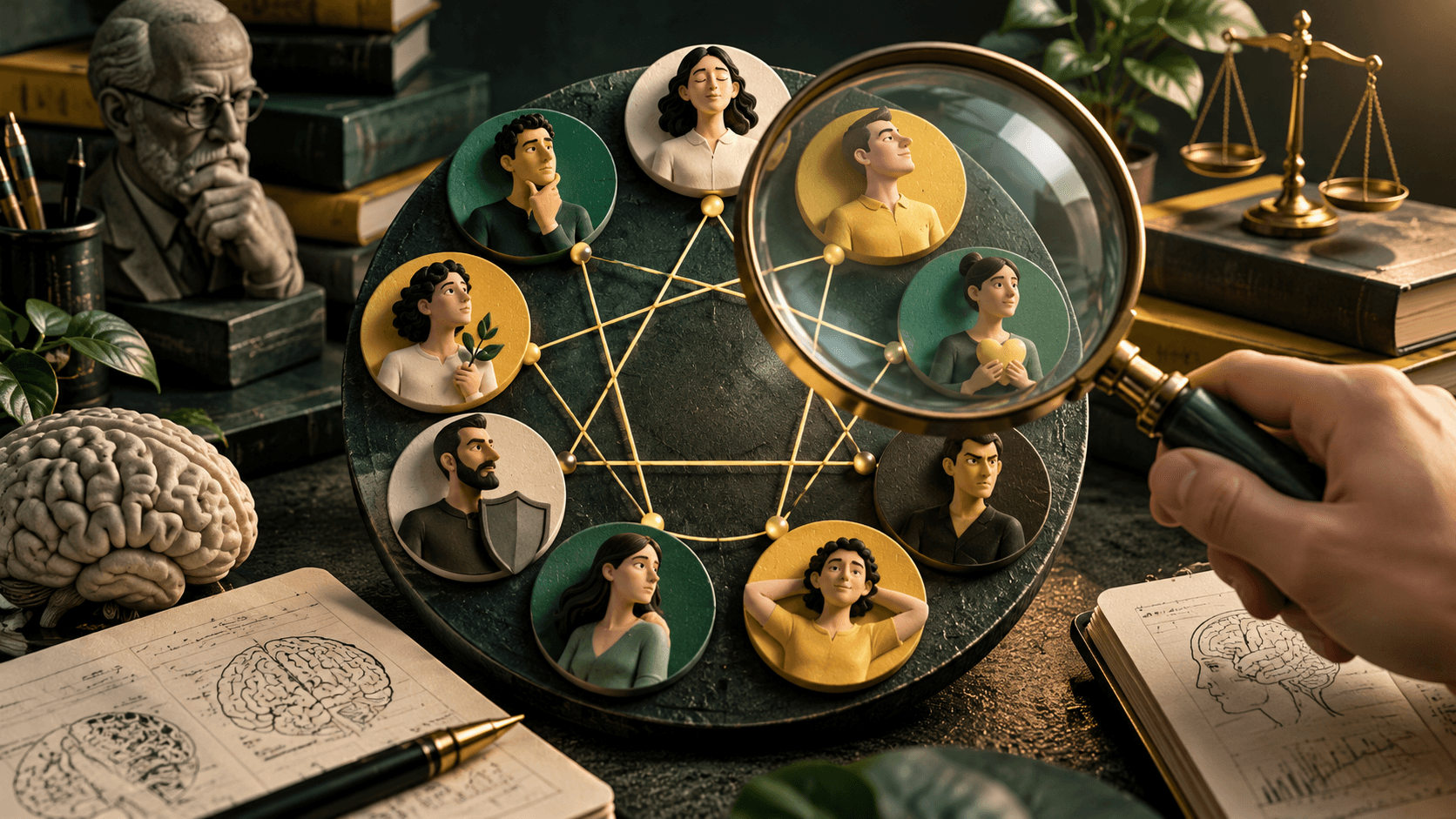
Later studies struggled to find much support for it. Meanwhile, research on what psychologists call assortative mating, the tendency for partners to be similar on various traits, kept producing the same result. Couples resemble each other far more often than they mirror each other.
What the research actually finds
Across many studies, partners tend to be similar on:
- Values and attitudes, including politics and religion, where similarity is often strongest.
- Education and intelligence, which tend to correlate noticeably between partners.
- Interests and lifestyle habits, such as drinking, smoking and physical activity.
- Age and background, partly because people meet in the same places.
A large 2023 analysis that pulled together studies on more than a hundred traits found that partners were similar on the large majority of them, and genuinely opposite on very few.
What about personality?
Here is the interesting twist. For the Big Five personality traits, the similarity between partners is real but usually small. Couples are only a little more alike in extraversion, conscientiousness or neuroticism than you would expect by chance. Openness to experience tends to show a little more matching than the others, but nothing dramatic.
So the more accurate summary is: partners are clearly alike in values and background, mildly alike in personality, and almost never systematically opposite. If you want a refresher on the five traits, our guide to the Big Five personality traits covers each one.
| Area | Typical pattern in couples | Strength of the link |
|---|---|---|
| Political and religious values | Similar | Strong |
| Education | Similar | Moderate to strong |
| Lifestyle habits | Similar | Moderate |
| Big Five personality | Slightly similar | Small |
| Clear "opposites" | Rare | Very weak or absent |
Does being similar make couples happier?
You might expect similar couples to be happier. The evidence is more nuanced.
A large 2010 study led by Portia Dyrenforth, using national samples from three countries, found that personality similarity explained only a tiny slice of relationship satisfaction. What mattered far more was each partner's own personality. People who were more emotionally stable, agreeable and conscientious tended to be happier in their relationships, more or less regardless of who they were with.
In other words, the question "are we alike?" matters less than "are we each easy to be in a relationship with?" Our article on which personality traits predict a happy relationship explores that in more depth.
Perceived similarity is powerful
There is another wrinkle. A 2008 meta-analysis by Matthew Montoya and colleagues found that actual similarity predicted attraction mainly before people had got to know each other. In existing relationships, perceived similarity, how alike you feel, was the stronger predictor. Feeling understood and "on the same wavelength" may matter more than matching scores on a questionnaire.
Why the myth survives
If the evidence is so clear, why does everyone still believe opposites attract?
- Differences are more noticeable. You take shared values for granted and notice the one area where you clash.
- Stories need contrast. Films and novels thrive on friction, so mismatched couples make better plots.
- Early attraction can feel like novelty. Someone different can be exciting at first, even if long-term comfort depends on overlap.
- Some differences genuinely complement. A planner and a spontaneous partner can balance each other, which feeds the general idea.
There is also a pattern that looks like opposites attracting but isn't about personality at all. Anxiously attached and avoidantly attached partners often find each other, and the pull can feel magnetic. That is less a happy complement and more a painful loop, which we unpack in the anxious-avoidant trap.
When differences can help
None of this means you need a carbon copy. Differences can work well when:
- You share the big things. Agreement on values, goals and how you want to live gives you a stable base to differ on the small things.
- The difference fills a practical gap. One of you handles bills, the other handles social plans. Some research on interpersonal style suggests a bit of complementarity in who leads and who follows can ease cooperation.
- You respect each other's way of doing things. A difference is only a problem when one partner treats it as a flaw to fix.
- Neither trait is extreme. A mild gap in tidiness is a running joke. A huge gap can become a daily battle.
Differences that tend to cause friction
Some gaps are harder than others. Couples often report more conflict when they differ sharply in:
- How much social time they want.
- How they handle money.
- How quickly they want to resolve disagreements.
- How much order and routine they need at home.
None of these are dealbreakers, but they work best when both partners name them early and agree on how to handle them.
How to use this in your own relationship
Rather than asking whether you are opposites, try asking more useful questions:
- Do we want broadly the same kind of life?
- Do I feel understood, even when we disagree?
- Can we talk about our differences without either of us feeling attacked?
Knowing your own traits helps. If you take our free personality test, and ideally your partner does too, you can compare where you overlap and where you differ. Treat the results as a starting point for conversation, not a compatibility score.
The bottom line
Opposites rarely attract in any systematic way. Partners tend to share values, background and lifestyle, and are only slightly alike in personality. Similarity on its own predicts surprisingly little about happiness; each partner's own traits, and the feeling of being understood, matter much more. Differences can enrich a relationship when the foundations are shared.
FAQ
Is "opposites attract" a myth?
Mostly, yes. Studies consistently find partners are more similar than different, especially on values, education and lifestyle, and genuinely opposite pairings are uncommon.
Do similar personalities make better couples?
Only slightly. Each partner's own emotional stability, agreeableness and conscientiousness tend to predict relationship satisfaction more than how closely their personalities match.
Can an introvert and an extrovert have a good relationship?
Yes. A difference in extraversion is very workable when both partners respect each other's social needs and agree on a balance of time together, apart and with others.