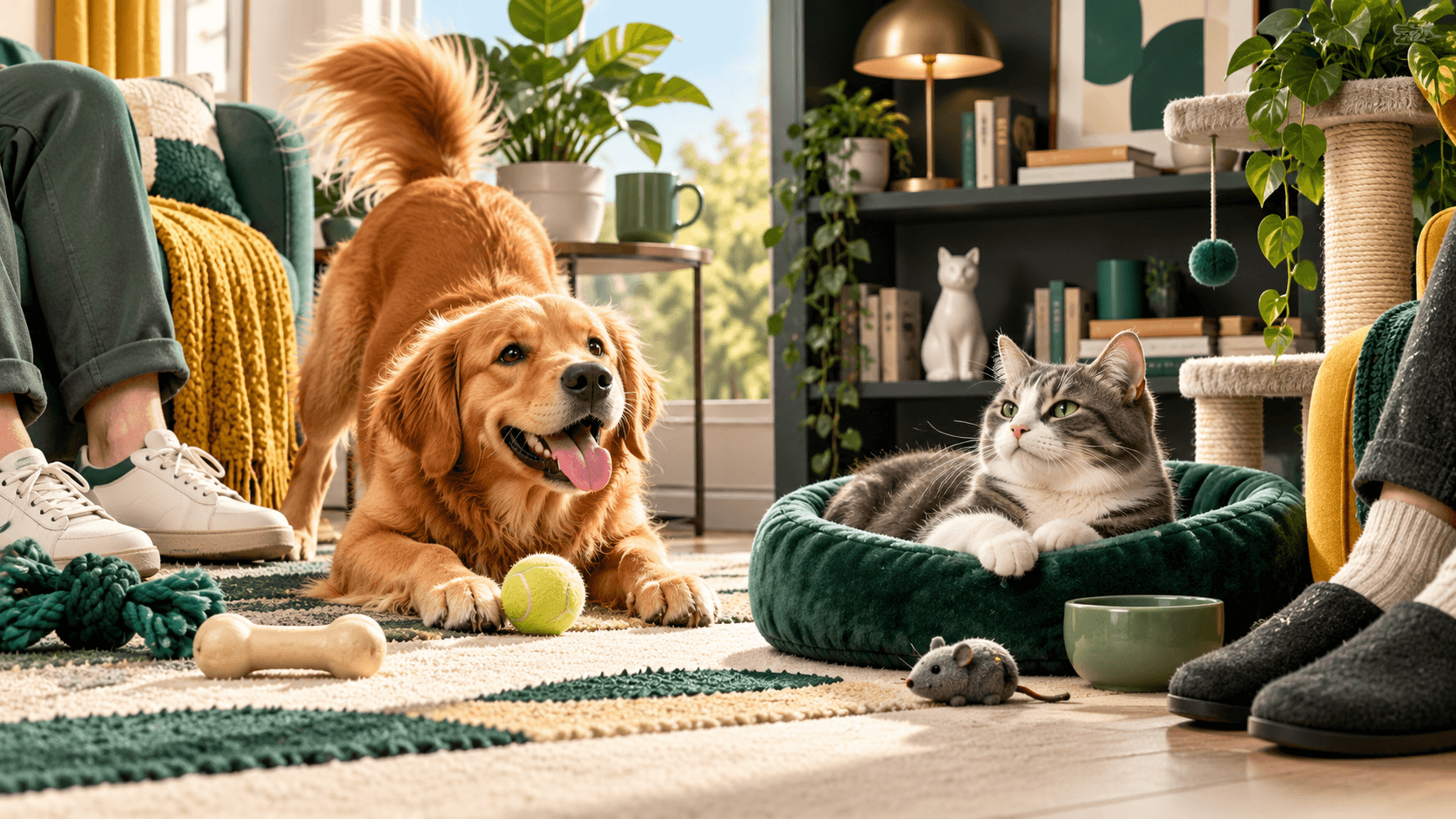
Ask a room of people whether they're a dog person or a cat person and almost everyone has an answer. Often a strong one. And with the answer usually comes a story about who they are: sociable and loyal, or independent and a bit mysterious.
It's a fun stereotype, and it turns out there is some research behind it. But the real differences are smaller and more interesting than the internet suggests. Here's what studies actually found, and what your pet preference does and doesn't say about you.
The study everyone cites
The best-known research on this question comes from the personality psychologist Sam Gosling and colleagues. In a 2010 study, they asked around 4,500 people to say whether they considered themselves a dog person, a cat person, both or neither, and to complete a Big Five personality questionnaire.
The results lined up with the stereotypes, at least on average:
- Dog people scored higher on extraversion, agreeableness and conscientiousness.
- Cat people scored higher on neuroticism and openness to experience.
That sounds like a neat split. But the details matter.
How big are the differences?
The differences in the Gosling study were real but small. In practical terms, that means the two groups overlapped heavily. Plenty of cat people were outgoing and organised, and plenty of dog people were anxious and imaginative.
| Big Five trait | Higher on average in | Size of the difference |
|---|---|---|
| Extraversion | Dog people | Small |
| Agreeableness | Dog people | Small |
| Conscientiousness | Dog people | Small |
| Neuroticism | Cat people | Small |
| Openness | Cat people | Small |
If you picked a random dog person and a random cat person, you'd often be wrong if you guessed which was more extraverted from their pet alone. If you're new to the five traits, our overview of the Big Five personality traits explains what each one measures.
It's also worth noting that self-identifying as a "dog person" or "cat person" isn't the same as owning one. Some studies look at preference, others at ownership, and the results don't always match.
Why the differences might exist
Researchers have suggested a few reasons why personality and pet preference might line up.
Lifestyle fit
Dogs need walks, routines and social contact. People who are extraverted and conscientious may find that lifestyle appealing, or at least manageable. Cats are often more self-sufficient, which may suit people who prefer a quieter home or irregular schedules.
Seeking a similar companion
People may be drawn to animals whose behaviour feels familiar. A sociable, eager dog may appeal to someone who enjoys the same qualities in people. A more independent cat may appeal to someone who values personal space.
Living circumstances
Housing, working hours and family situations all shape what pet is practical. These factors also correlate with personality and age, which can create apparent links.
The pet may shape the person, a little
There's limited evidence on this, but living with a dog does tend to mean more walks and more chats with strangers. Whether that changes personality over time isn't well established.
Busting the common myths
The internet has run with these findings, and some claims go far beyond the evidence:
- "Cat people are introverts." Cat people score slightly lower on extraversion on average, but many are very sociable. Our article on introvert myths explains why introversion is often misunderstood anyway.
- "Cat people are smarter." You'll see this claim often. A few small studies have reported cat lovers scoring slightly higher on certain measures, but the evidence is thin and not something to build an identity on.
- "Dog people are nicer." Dog people score a little higher on agreeableness on average, which is a long way from being nicer as individuals.
- "Your pet choice reveals your relationship style." There's no good evidence for this.
What higher openness among cat people might mean
The openness difference is one of the more interesting findings. Openness to experience covers curiosity, imagination, appreciation of art and enjoyment of unconventional ideas. People high in openness may be drawn to animals that seem complex, independent or unusual.
If that sounds like you, our guide to openness to experience explores how the trait shows up in creativity and everyday life.
Signs your pet preference fits your personality
Many people love dogs and cats equally, and quite a few have neither. In the Gosling study, people could choose "both" or "neither," and those groups didn't fit the stereotypes neatly either. Pet preference is one small piece of a much larger personality picture.
Still, if you do have a clear favourite, you might notice some overlap if:
- You love routine, company and outdoor activity, and dogs feel like natural companions.
- You value calm, independence and personal space, and cats feel easy to live with.
- You enjoy unpredictability and curiosity in animals, and in people.
- Your choice of pet matches how you organise your week.
If none of these fit, that's fine too. It's a reminder that the stereotypes describe averages, not individuals.
It's also worth thinking about the animal in front of you, not just the species. Dogs and cats vary enormously in temperament. A calm, independent dog and a clingy, chatty cat are both common. Many owners find they bond with a particular animal's personality far more than with the idea of being a "dog person" or a "cat person". In that sense, the most revealing question may not be which species you prefer, but which qualities you enjoy living with every day.
A better way to find out who you are
Pet preference is a fun conversation starter, but it's a weak guide to personality. A proper Big Five questionnaire measures your traits much more accurately than any single preference can. If you're curious where you really sit, take our free personality test and see whether you match the dog person or cat person profile.
The bottom line
Research suggests dog people are, on average, slightly more extraverted, agreeable and conscientious, while cat people are slightly more open and more prone to worry. But the differences are small, the groups overlap a lot, and plenty of people break the mould. Your pet preference says a little about you, not a lot.
FAQ
Are dog people more extraverted than cat people?
On average, yes, slightly. A study of around 4,500 people by Sam Gosling and colleagues found dog people scored a little higher on extraversion, but the groups overlapped heavily.
Are cat people more intelligent?
The evidence is limited. A few small studies have reported slight differences, but there's no strong, consistent finding that cat people are smarter.
Do pets change your personality?
There's little solid evidence that owning a dog or cat changes core traits. Pets can change daily routines, such as how often you walk or chat to neighbours.
What if I like both dogs and cats?
That's common. Research suggests many people don't fit neatly into either group, and pet preference is only a small clue to personality.