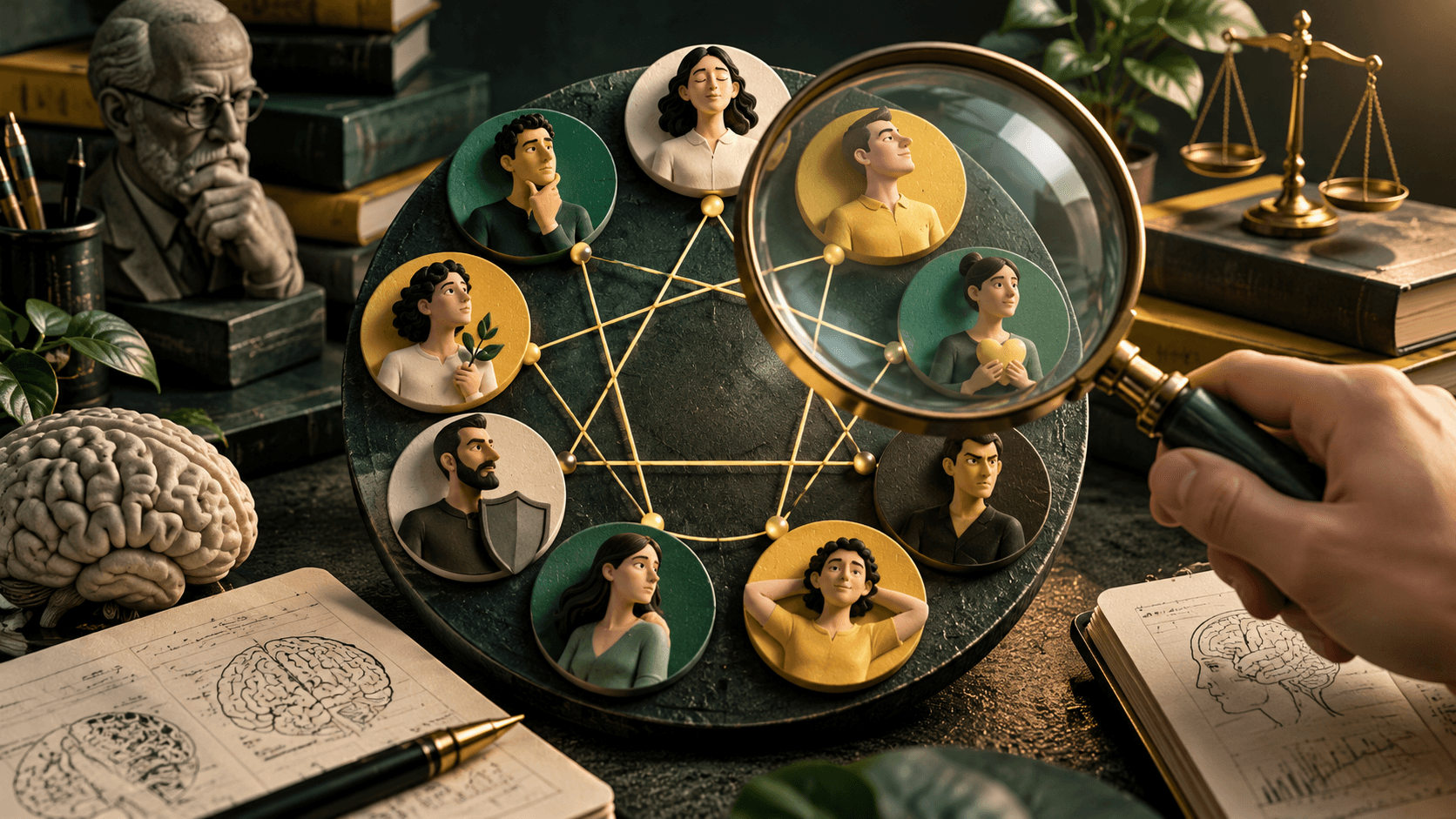
The office radio is on, someone is eating crisps two desks away, and the overhead light has a faint flicker no one else seems to notice. By lunchtime you feel wrung out, even though nothing "happened." Meanwhile, a moving film trailer can bring you close to tears.
If that sounds like you, you may have come across the term highly sensitive person, or HSP. It is one of the most popular ideas in pop psychology, and also one of the most misunderstood. Here are 12 common signs, what the research genuinely supports, and where the evidence is still open.
What is a highly sensitive person?
The term comes from psychologists Elaine Aron and Arthur Aron, who in 1997 published research on a trait they called sensory processing sensitivity. They proposed that some people's nervous systems process information more deeply, which makes them more aware of subtleties and more easily overwhelmed by intense input.
Aron estimated that around 15 to 20% of people are highly sensitive. Crucially, it is described as a normal temperament trait, not a disorder or a diagnosis. Sensitivity is something you have more or less of, like height, rather than a box you are in or out of.
12 signs you might be highly sensitive
These signs are drawn from the kinds of items used in sensitivity questionnaires. Recognising a few is common; recognising most of them may mean you sit towards the sensitive end.
- You get overwhelmed by noise, crowds or bright lights more quickly than the people around you.
- You need downtime after busy days, ideally somewhere quiet and dim.
- You notice small details others miss: a changed picture frame, a slight shift in someone's tone.
- Other people's moods affect you strongly, sometimes before they have said anything.
- You are deeply moved by art, music or nature.
- You dislike being watched while you work, and perform worse under scrutiny.
- You startle easily at sudden sounds or surprises.
- Hunger or tiredness hits you hard, affecting your mood and focus.
- You think things through carefully before acting, and dislike being rushed into decisions.
- You find violent or upsetting media hard to shake off.
- You are conscientious about avoiding mistakes, and feel criticism keenly.
- You have a rich inner life, with vivid thoughts, dreams or imagination.
What the research actually says
The core idea has decent support
Aron's Highly Sensitive Person Scale has been used in many studies and does seem to capture something real and measurable. Researchers often describe the trait with the shorthand DOES: depth of processing, overstimulation, emotional reactivity and empathy, and sensitivity to subtleties.
Orchids and dandelions
One of the most interesting ideas linked to sensitivity is differential susceptibility, developed by researchers including Jay Belsky and Michael Pluess. It suggests that some people are more affected by their environment in both directions: they struggle more in harsh conditions but also benefit more from supportive ones. Writers often call these people "orchids," compared with hardier "dandelions."
A 2018 study involving Pluess and colleagues suggested that rather than two groups, people fall into roughly three bands: low, medium and high sensitivity, with the high group making up something closer to a third of people in some samples. That fits the idea that sensitivity is a spectrum.
Where the science is mixed
There is an ongoing debate about how distinct the trait really is. HSP scores overlap considerably with two of the Big Five traits: neuroticism, which reflects a tendency to feel negative emotions strongly, and openness to experience, which captures aesthetic sensitivity and imagination. Some researchers argue sensitivity is mostly a blend of these, while others think it adds something unique. Brain imaging studies are interesting but small, so it is wise not to lean on them too heavily.
HSP, introversion and neuroticism: not the same thing
| Highly sensitive | Introverted | High neuroticism | |
|---|---|---|---|
| Core feature | Deep processing of input | Preference for less social stimulation | Tendency toward negative emotion |
| Drained by | Intensity of any kind | Lots of social interaction | Stress and uncertainty |
| Can be social? | Yes, Aron notes many HSPs are extraverts | Often enjoys small groups | Yes, varies widely |
| Hidden upside | Empathy, attention to detail | Focus, depth | Caution, conscientious worry |
If you identify with high emotional reactivity specifically, our guide to high neuroticism explores that trait and its surprising benefits. And if you have always assumed sensitivity means introversion, these introvert myths may change your mind.
The upside of sensitivity
Sensitivity is often framed as a weakness, but the research on differential susceptibility suggests a more balanced picture. Sensitive people tend to:
- Notice problems early, in work, relationships and their own wellbeing.
- Respond especially well to supportive environments, good teaching and therapy.
- Bring empathy, care and thoroughness to the people and projects they love.
The aim is not to toughen up, but to arrange your life so your sensitivity has room to be useful rather than draining.
Living well as a sensitive person
A few practical habits help most highly sensitive people:
- Protect your recovery time. Schedule quiet after demanding events, rather than hoping you will find it.
- Control your sensory load. Noise-cancelling headphones, softer lighting and a tidy workspace can make a real difference.
- Pace decisions. Ask for time to think when it is genuinely important to you.
- Choose your inputs. It is fine to skip the distressing news story or violent series.
- Explain your needs. Saying "I need twenty minutes to recharge" is far easier for others to accept than silent withdrawal.
Sensitivity is not a formal clinical category, so there is no test that will diagnose you. If overwhelm is seriously affecting your daily life, talking with a doctor or therapist is a sensible step. To understand the broader traits behind your sensitivity, you can take our free personality test and see how you score on neuroticism, openness and the rest of the Big Five.
The bottom line
Being a highly sensitive person describes a real, measurable tendency to process the world deeply and get overwhelmed more easily. It is a normal trait, not a disorder, and it comes with genuine strengths as well as challenges. The science is still settling on how separate it is from neuroticism and openness, but the practical advice is clear: respect your limits and build an environment that lets you thrive.
FAQ
Is being a highly sensitive person a real thing?
Yes, in the sense that sensory processing sensitivity is a measurable trait studied in peer-reviewed research. Scientists still debate how distinct it is from established traits like neuroticism and openness.
How common are highly sensitive people?
Aron's original estimate was about 15 to 20% of people. Later research suggests sensitivity exists on a spectrum, with perhaps a third of people at the high end in some samples.
Is HSP the same as being an introvert?
No. Many highly sensitive people are introverts, but a meaningful share are extraverts. Sensitivity is about how deeply you process input, while introversion is about how much social stimulation you prefer.
Can you stop being highly sensitive?
Sensitivity is a temperament trait, so it is unlikely to disappear, and it does not need to. Many people learn to manage overwhelm and find their sensitivity becomes a strength.