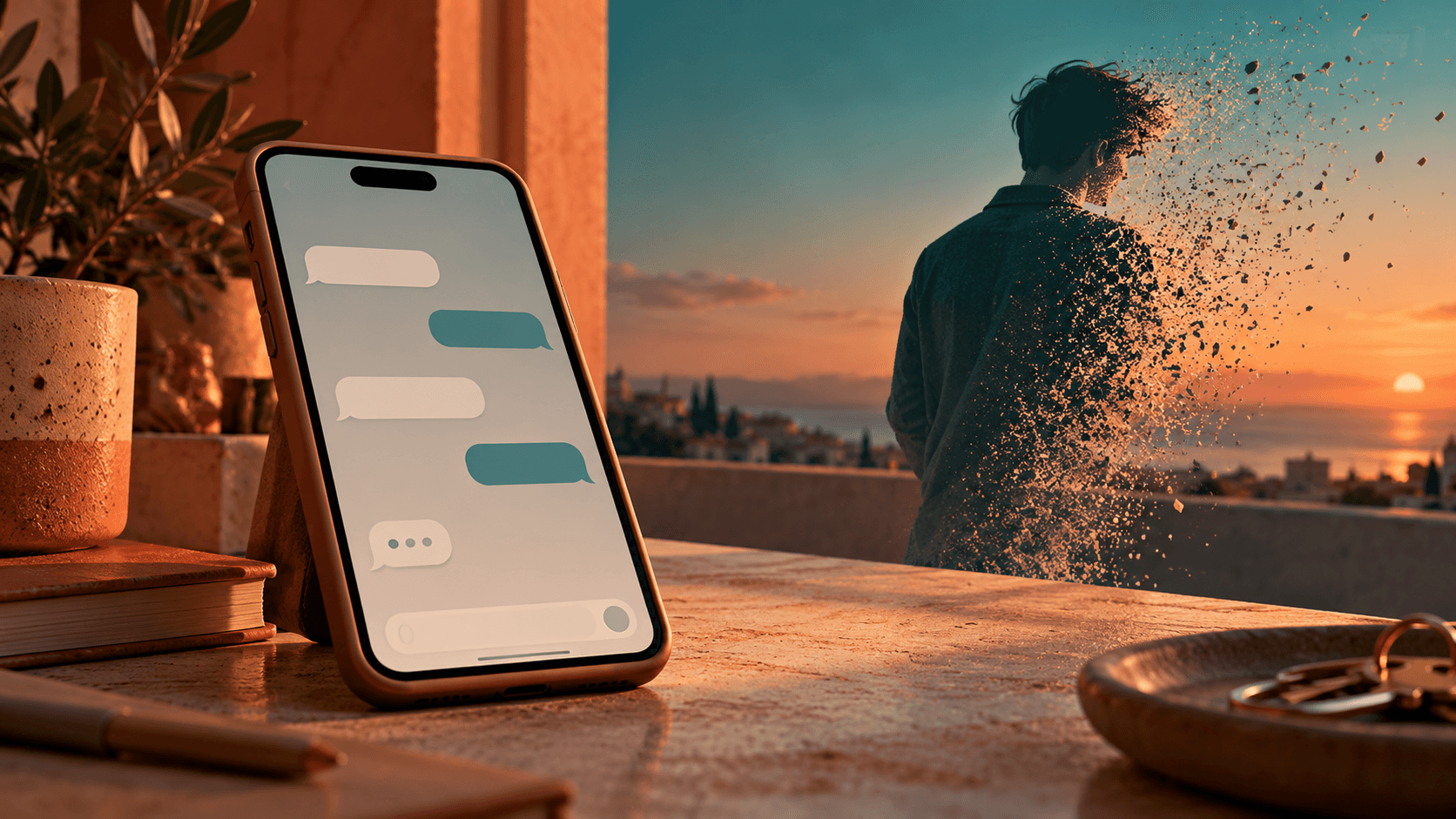
One day you're making plans. The next, nothing. No argument, no goodbye, no explanation. Messages sit unread, or read and unanswered, and you're left replaying every conversation looking for the moment it went wrong.
Being ghosted can hurt out of all proportion to how long you knew someone, and it often leaves one question burning: why would anyone do that? Psychology has some answers. They won't make it painless, but they can make it less personal.
What ghosting is, and why it's so common
Ghosting means ending contact with someone suddenly and without explanation, usually by stopping replies altogether. It happens in dating, friendships and even work.
It isn't new. People have always drifted away or avoided hard conversations. But modern communication makes it far easier. When a relationship lives mostly on a phone, ending it can be as simple as not opening an app. Surveys suggest a large share of daters have both been ghosted and ghosted someone themselves.
Ghosting also varies in form. Some people vanish overnight. Others fade slowly, replying less often and more briefly until the messages stop. Some reappear weeks later with a casual "hey", as if nothing happened. Each version leaves the other person with the same problem: an ending they have to interpret on their own. If you met on an app, our piece on what dating apps do to anxious and avoidant daters explains why these endings are so common there.
Why people ghost
Research and interviews with people who ghost point to a handful of recurring reasons. Usually it's a mix.
Avoiding an uncomfortable conversation
The most common reason is simple: explaining feels awkward, painful or confrontational. People worry about hurting the other person, being argued with, or feeling guilty. Silence seems easier, at least in the moment.
Low investment
When people have only met a few times, or only talked online, some feel that no explanation is owed. The relationship didn't feel "real" enough to warrant a goodbye.
Overwhelm or emotional shutdown
Some people ghost because they feel overwhelmed and freeze. They may intend to reply, then let it slide until it feels too late. Our article on why your partner goes silent after arguments explores this kind of shutdown in longer relationships.
Safety concerns
Sometimes ghosting is a reasonable choice. If someone feels uncomfortable, unsafe or pressured, cutting contact without explanation can be self-protective.
Beliefs about relationships
One interesting study, by Gili Freedman and colleagues in 2019, found that people who hold stronger "destiny" beliefs, the idea that relationships are either meant to be or not, were more accepting of ghosting. If it isn't meant to be, the logic goes, why explain?
| Reason | What it sounds like inside | Is it about you? |
|---|---|---|
| Avoiding conflict | "I don't know how to say this." | Rarely |
| Low investment | "We barely knew each other." | Not really |
| Overwhelm | "I'll reply later." (Never does) | Rarely |
| Safety | "I need to get out of this." | Sometimes, if there were real red flags |
| Destiny beliefs | "It just wasn't meant to be." | No |
Where attachment style fits in
Attachment style doesn't decide who ghosts, but it shapes how people handle endings.
Avoidant attachment and ghosting
People with higher attachment avoidance tend to feel uncomfortable with emotional intensity and dependence. Ending things in person or with a heartfelt message can feel especially hard. Some research suggests avoidance is linked with more acceptance of indirect break-up strategies, including ghosting. Our guide to how avoidants handle breakups explains what's often going on beneath that calm exterior.
Anxious attachment and being ghosted
Anxiously attached people tend to find ghosting especially painful. The ambiguity is the hardest part: there's no clear ending, so the mind keeps searching for one. You may find yourself checking their profile, drafting messages or replaying conversations for clues.
Fearful avoidant attachment
People with fearful avoidant patterns may both ghost and be deeply hurt by ghosting. They may vanish when closeness feels threatening, then feel guilty or regretful afterwards.
Why ghosting hurts so much
Even when you barely knew the person, ghosting can sting for a few reasons:
- Social rejection hurts. Research on social exclusion suggests that being left out activates some of the same brain systems involved in physical pain.
- There's no closure. Without an explanation, your mind fills the gap, often with harsh stories about yourself.
- It undermines trust in your judgement. You thought things were going well, so you start doubting your read on people.
- It's hard to respond. There's no conversation to have, which can leave you feeling powerless.
How to cope if you've been ghosted
You can't make someone explain, but you can take care of yourself.
- Remind yourself it says more about them. Ghosting usually reflects the ghoster's discomfort, not your worth.
- Write your own ending. A few sentences in a journal, or an unsent message, can create a sense of closure.
- Limit checking. Muting or archiving the chat reduces the urge to look for signs.
- Talk to someone. A friend's perspective can quiet the replaying.
- Notice your patterns. If ghosting keeps hurting in the same way, it may be worth looking at your attachment needs. You can take our free attachment style test to understand your reactions better.
If the hurt feels overwhelming or connects to older experiences of being abandoned, talking with a professional can help.
How to end things without ghosting
If you've ghosted before, or feel tempted to, a short, kind message is usually enough:
- "I've enjoyed getting to know you, but I don't feel this is the right fit. I wish you the best."
- "I'm not in a place to date right now, and I didn't want to just disappear."
You don't need to give detailed reasons. Clarity and kindness go a long way. The exception, again, is when you feel unsafe: then your wellbeing comes first.
The bottom line
People ghost mostly to avoid discomfort, because they feel little investment, or because they're overwhelmed, and sometimes to stay safe. Attachment style shapes both who tends to vanish and who is hit hardest. Being ghosted hurts, but it's rarely a verdict on you, and a little self-kindness can help you find the ending they didn't give.
FAQ
Why do people ghost instead of explaining?
Most often to avoid an uncomfortable conversation. Low investment, overwhelm and, sometimes, safety concerns are other common reasons.
Is ghosting a sign of avoidant attachment?
It can be linked. People with higher attachment avoidance may find direct endings especially uncomfortable, but people of any attachment style can ghost.
Why does being ghosted hurt so much?
Rejection activates strong emotional responses, and the lack of explanation leaves your mind searching for answers, often blaming yourself.
Should I message someone who ghosted me?
You can send one calm message if it helps you feel at peace, but try not to expect a reply. Focusing on your own closure is usually more helpful.