At some point in school, you may have been told you were "word smart", "people smart" or "body smart". Classroom posters showed eight kinds of intelligence, each with its own little icon, and the message was warm: everyone is clever in their own way.
That message came from Howard Gardner's theory of multiple intelligences, one of the best-known ideas in education. Among researchers who study intelligence, though, it has a far rockier reputation. Here's what the theory says, why it caught on, and why the evidence doesn't support it the way many people assume.
What Gardner proposed
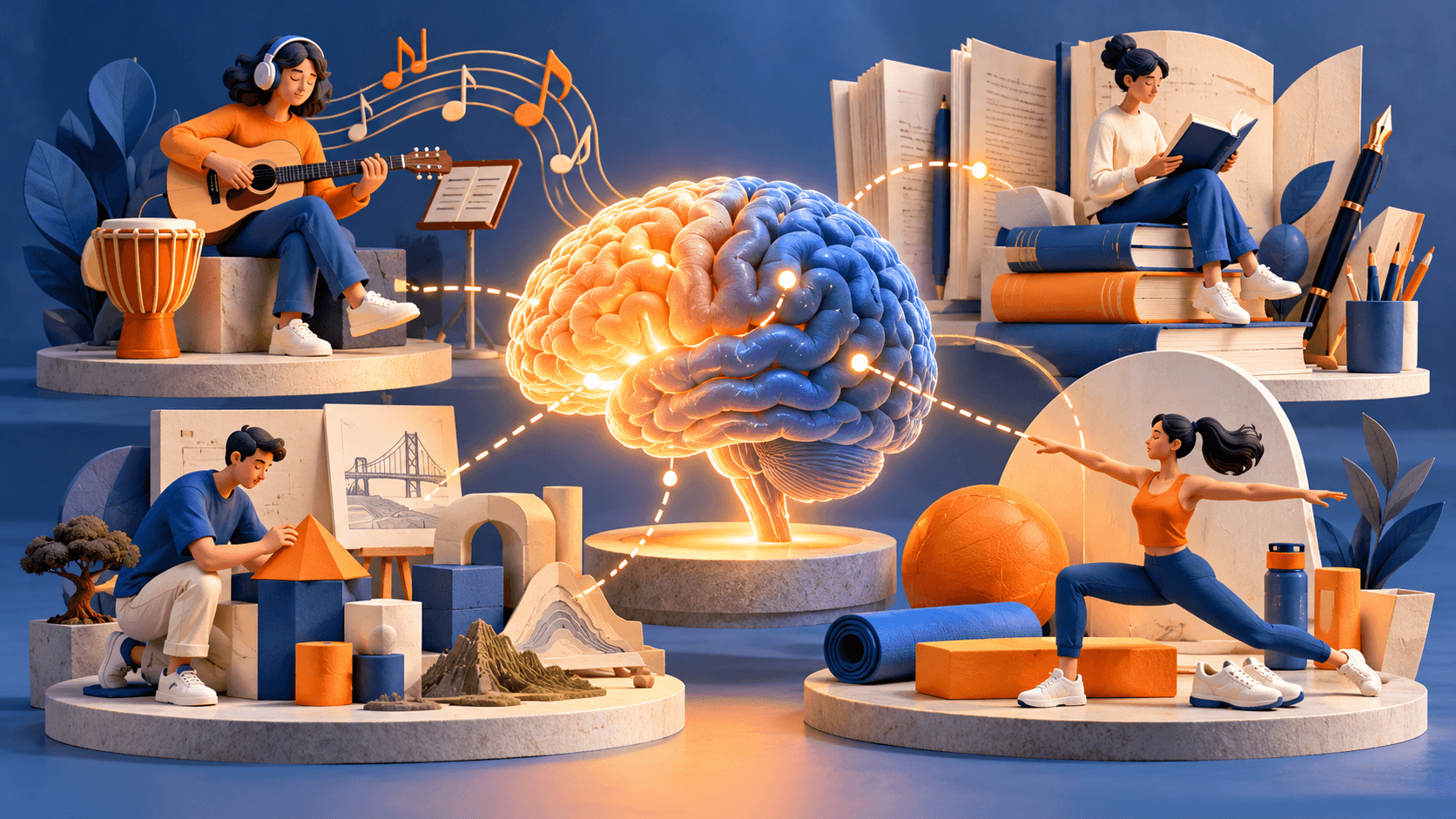
In his 1983 book Frames of Mind, Harvard psychologist Howard Gardner argued that intelligence isn't one general ability but several relatively independent ones. He originally listed seven and later added an eighth:
- Linguistic: skill with words and language
- Logical-mathematical: reasoning, numbers and abstract patterns
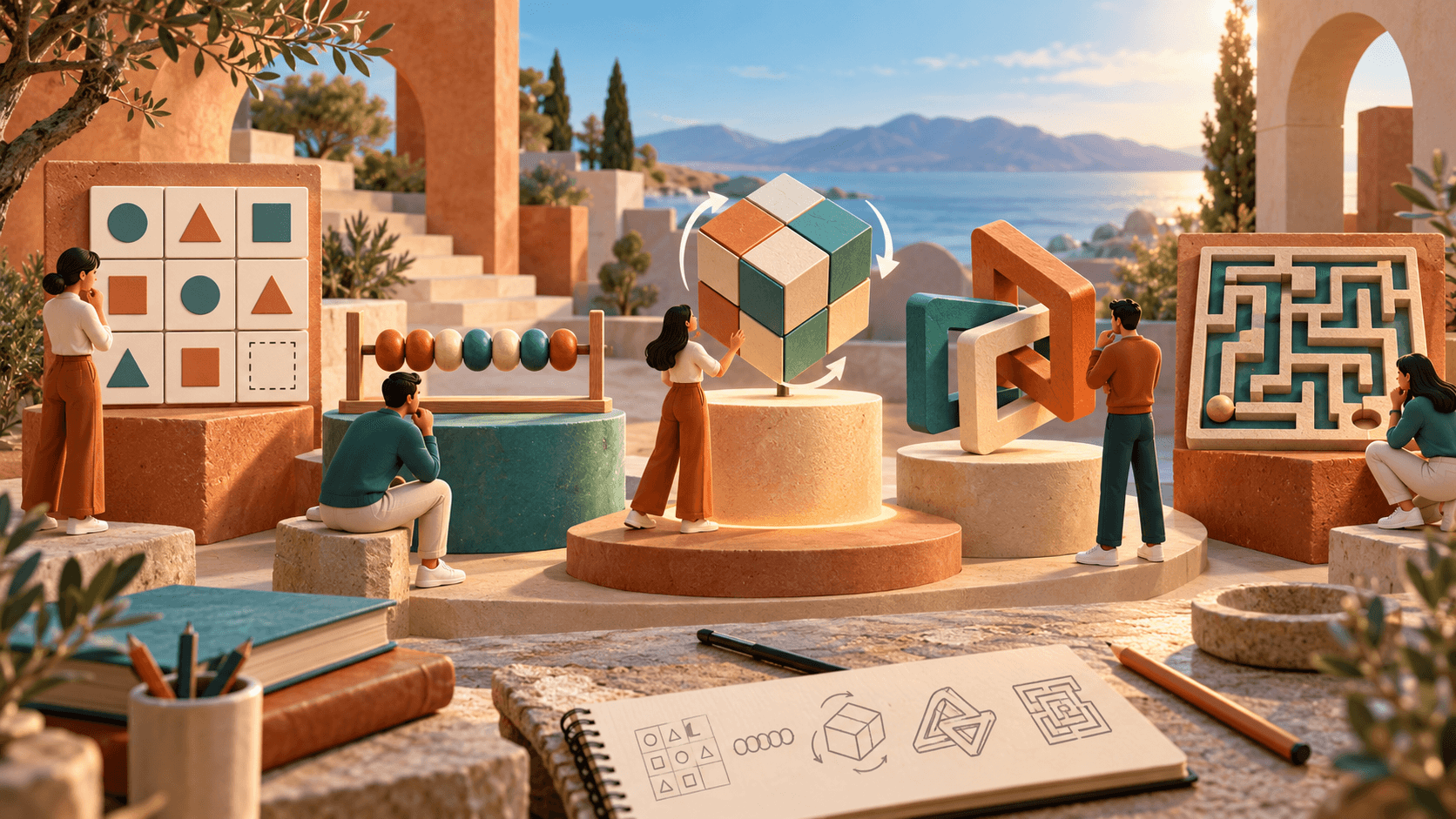
- Spatial: picturing and manipulating images in your mind
- Musical: pitch, rhythm and musical structure
- Bodily-kinaesthetic: using your body skilfully, as dancers and athletes do
- Interpersonal: understanding other people
- Intrapersonal: understanding yourself
- Naturalist: recognising and classifying living things and patterns in nature, added in the 1990s
Gardner has also discussed a possible "existential" intelligence, concerned with big questions about life and meaning.
To decide what counted as an intelligence, Gardner used a set of criteria. These included evidence that brain injury can damage one ability while sparing others, the existence of prodigies and savants with uneven profiles, a distinct developmental path, and a plausible evolutionary history.
Why the idea became so popular
It's easy to see why the theory spread so quickly through schools:
- It feels fair. It suggests every child has strengths, which is a lovely message for teachers and parents.
- It matches everyday experience. Most of us know someone who's brilliant with people but dreads maths, or a gifted musician who struggled in exams.
- It challenges narrow testing. Many people felt that IQ tests and exams ignored abilities that matter in real life.
- It's easy to apply. Teachers could design activities around each intelligence.
Those are good instincts. The problem is whether the theory accurately describes how human abilities are actually organised.
Do the intelligences really stand apart?
The central claim of the theory is that these abilities are relatively independent. That's where most of the scientific trouble starts.
Abilities tend to go together
One of the most replicated findings in psychology is that performance on different mental tests is positively correlated. People who do well on vocabulary tend to do well on spatial puzzles, memory tasks and reasoning problems too. This pattern is called the positive manifold, and it's the basis for the general factor of intelligence, or g. Our post on the g factor explains why it's still debated.
Gardner's theory predicts relatively independent intelligences. When Beth Visser, Michael Ashton and Philip Vernon put this to the test in 2006, they found that measures of several of the more cognitive intelligences, such as linguistic, logical-mathematical and spatial, were substantially correlated with one another and with g. The abilities least tied to g included bodily-kinaesthetic and musical, which critics argue are better described as talents or skills.
It's hard to test
Gardner has been reluctant to create standardised tests for each intelligence, partly because he didn't want the theory turned into a new set of labels. That's understandable, but it makes the theory hard to confirm or disprove. In a 2006 review, Lynn Waterhouse concluded that the theory lacked adequate empirical support.
Other criticisms
Even setting the measurement problems aside, critics have raised two further objections.
Is everything an intelligence?
Nobody doubts that musical talent or athletic skill are real and valuable. The question is whether calling them intelligences adds explanatory power, or simply renames abilities we already had words for. Critics point out that by the same logic, you could add a "cooking intelligence" or a "driving intelligence".
The brain doesn't divide that neatly
Gardner pointed to brain injury cases as evidence for separate intelligences. Modern neuroscience shows that complex skills generally draw on widely distributed, overlapping brain networks rather than tidy, separate modules, which sits awkwardly with the idea of eight independent systems.
The learning styles mix-up
In many classrooms, multiple intelligences blurred into the idea of learning styles: the belief that you should teach "musical" children through songs and "bodily" children through movement. Gardner himself has publicly said that multiple intelligences are not the same thing as learning styles.
The learning styles idea has its own problems. A 2008 review by Harold Pashler and colleagues found little good evidence that matching teaching to a student's preferred style improves learning.
| Popular claim | What the evidence suggests |
|---|---|
| There are eight independent intelligences | Many of them correlate with each other and with general intelligence |
| Every child should be taught through their dominant intelligence | Matching teaching to a preferred style hasn't been shown to improve learning |
| IQ tests measure only one narrow ability | Modern IQ tests sample several abilities, including verbal, spatial, memory and speed |
| Musical and physical skill are types of intelligence | They're real abilities, but many researchers see them as talents |
What the theory gets right
It would be unfair to call the idea worthless. It got some important things right:
- Intelligence has more than one part. Mainstream models, such as the Cattell-Horn-Carroll framework, include several broad abilities beneath g, like fluid reasoning, acquired knowledge and visual processing. The difference is that these abilities are correlated, not independent. Our guide to fluid vs crystallized intelligence explains two of them.
- IQ isn't everything. Social skill, creativity, practical know-how and emotional understanding matter enormously in life, even if they don't fit neatly into IQ. We compare two of these in IQ vs EQ.
- Varied teaching can help. Lessons that use stories, visuals, discussion and hands-on work are often more engaging, even if not for the reasons the theory suggests.
How to think about your own strengths
You can value your different talents without needing them to be separate intelligences. Being a great listener, a talented guitarist or a natural athlete is worth celebrating on its own terms.
If you're curious about your reasoning skills specifically, take our free IQ test. It looks at the kinds of abilities, like pattern recognition and logical reasoning, that research shows tend to hang together, and it's one useful piece of a much bigger picture.
The bottom line
Gardner's multiple intelligences theory is popular because it's generous and intuitive, but the evidence doesn't support eight independent intelligences. Most mental abilities are correlated, and the theory has been hard to test. Its lasting value is a reminder that people have many kinds of strengths worth recognising.
FAQ
What are Gardner's multiple intelligences?
Gardner proposed eight: linguistic, logical-mathematical, spatial, musical, bodily-kinaesthetic, interpersonal, intrapersonal and naturalist. He has also discussed a possible existential intelligence.
Is multiple intelligences theory scientifically proven?
No. It's widely used in education, but research has found that many of the proposed intelligences correlate with general intelligence, and the theory lacks strong empirical support.
Are multiple intelligences the same as learning styles?
No. Gardner has said they're different ideas, and research hasn't found good evidence that teaching to a preferred learning style improves results.
Why do psychologists prefer the g factor?
Because scores on different mental tests consistently correlate, a general factor explains a lot of the variation between people. Most modern models combine g with several broader, related abilities.